|
|
As the hot, dry weather finally gives way to some much needed drizzle and cooler temperatures, we’re busy catching up with late summer veg growing. Read on to hear our news from the field and polytunnels… |
|
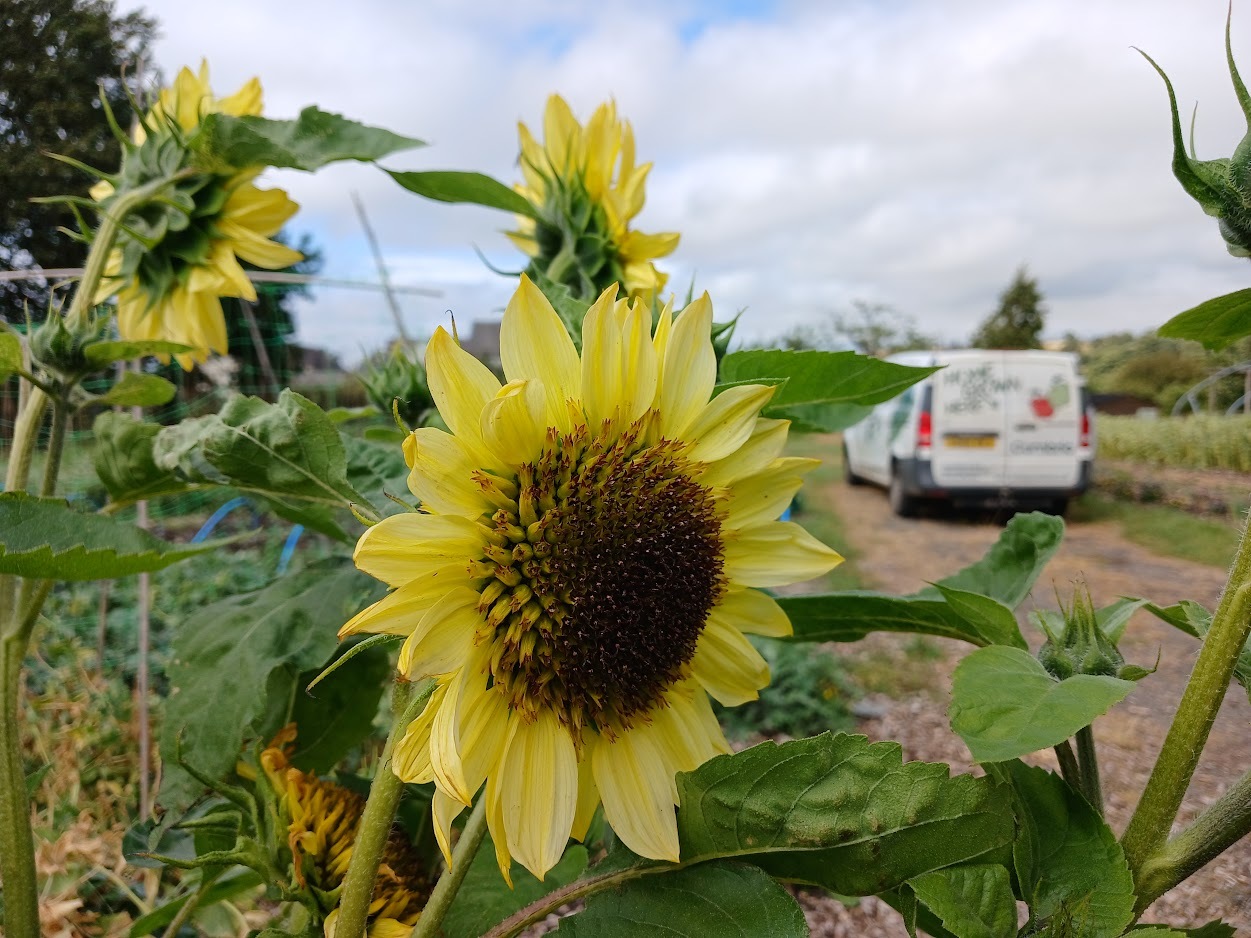
Dusty fields. Stream beds cracked dry. Brown grass and crispy carrot tops. And we’re some of the lucky ones. Growers and farmers across the UK have been hit hard by the dryest July on record and with temperatures well into the high twenties and early thirties even here in Cumbria, the country is looking at a poor harvest and difficult winter ahead. As the effects of climate change and the reality of the climate crisis hit home, food supply chains are put to the test. Veg growing co-operatives, local market gardens, and veg box schemes like Home Grown Here offer a welcome alternative to empty supermarket shelves, thousands of food miles, and soaring retail prices, but we’re not going to lie: it’s been a tough one.
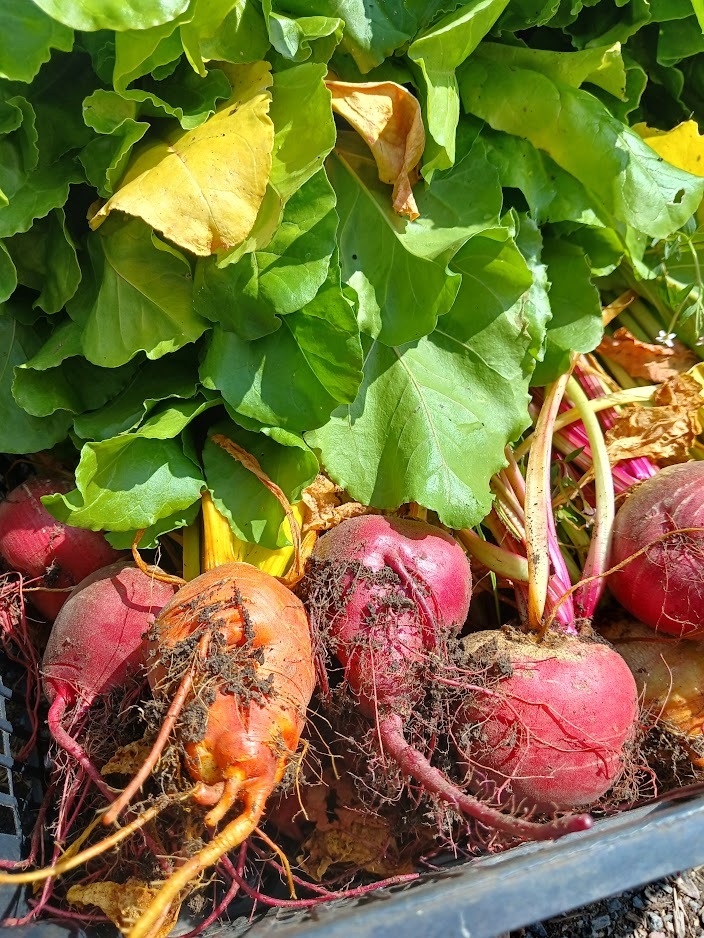
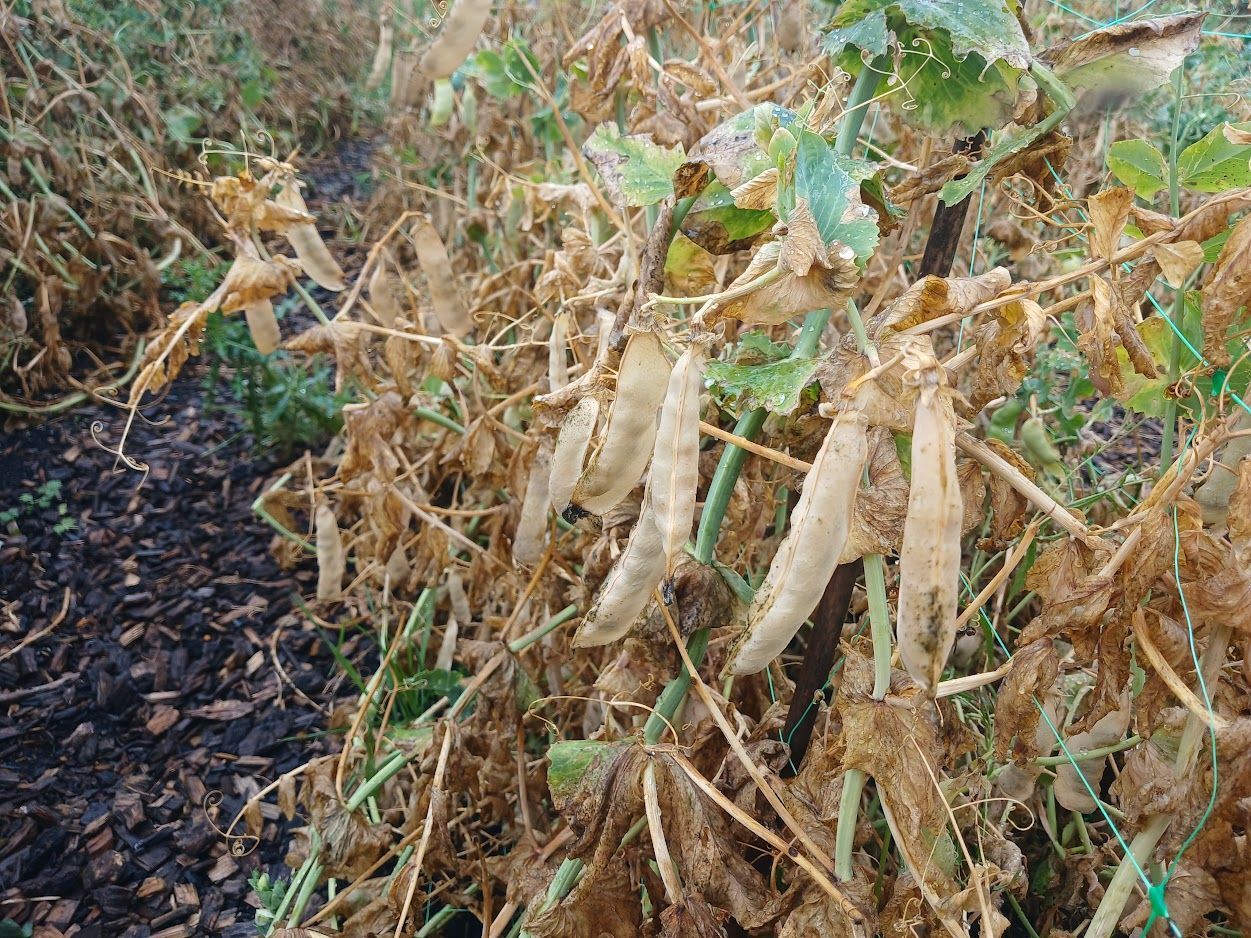
Our veg field sits on top of a hill, so our only water source is rain; we have an IBC (industrial water butt) in the field that we use to water in seedlings but that doesn’t contain enough water to properly irrigate the field. Our field crops dig their roots deep into our no-dig beds to find moisture locked in by the undisturbed soil structure and last year’s layer of manure beneath the compost. Some crops have survived well and even thrived: we’ve had a very good beetroot harvest, and our kale is flourishing with the dry weather meaning no slugs to munch on young, tender leaves. But some have fared less well, particularly the spinach and chard, which will bolt at any given opportunity in the hot weather, and the mangetout peas, which were baked dry on the plants before we could finish harvesting them all! |
|
Mangetout dried out before harvesting - good for seed saving, less ideal for feeding our customers! |
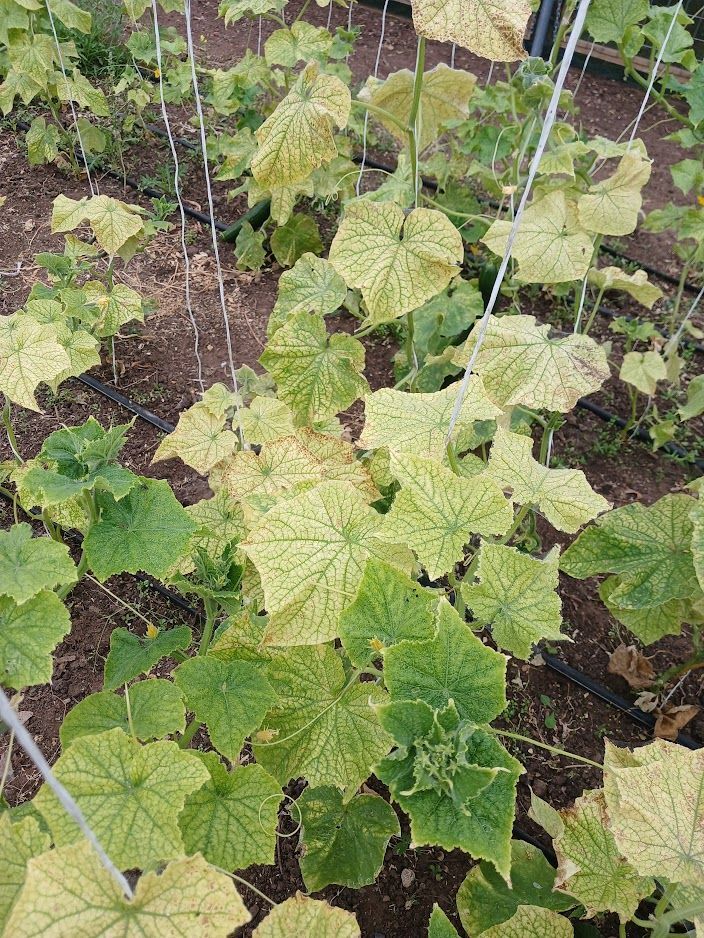
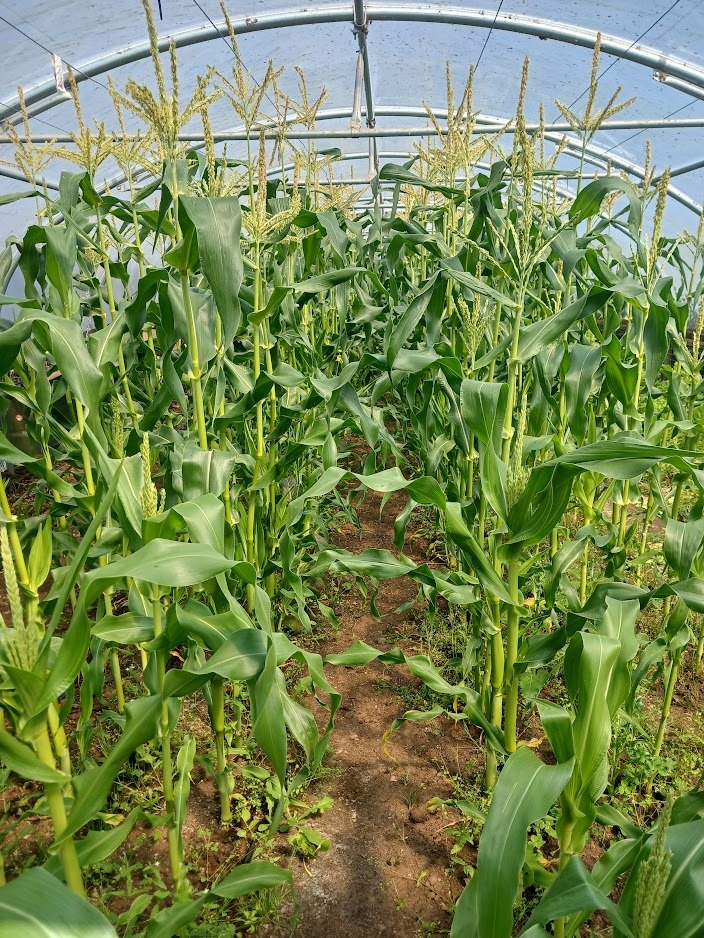
Up at the polytunnels, our mains water supply means that we’re able to irrigate regularly, but doesn’t abate the heat or dry air. Red spidermite, a common greenhouse pest that feeds on healthy plants, turning them dry and crispy, thrives in hot dry conditions, and unfortunately took out an entire polytunnel of cucumbers during the July heatwave. We manage spidermite with a combination of predatory mites, removing affected plants, and watering, but it’s very hard to get under control once it’s taken hold. Our cucumbers are often the most affected, and we’re considering trying to grow some outside next year to avoid the spidermite.
This week’s change in the weather is a welcome relief from the hot and dry conditions, and elsewhere in the UK things are cooling down slightly too, but hot summers can have long lasting effects into autumn and winter food supplies. The best thing you can do right now is continue to support local growers, eat seasonally, and have a go at growing your own. We’ll be here with a veg bag on your doorstep come rain or shine! |
|
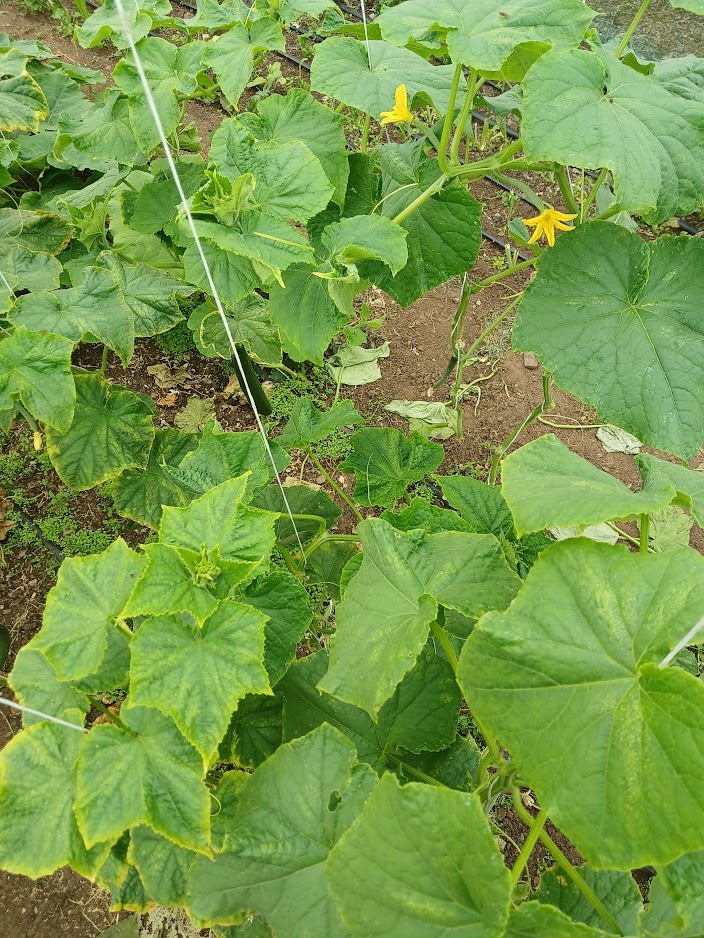
Healthy young cucumber plants with bright green leaves and developing fruits |
|
|
Young cucumbers affected by red spidermite, with crispy yellowed leaves and stunted growth |
|
|
|
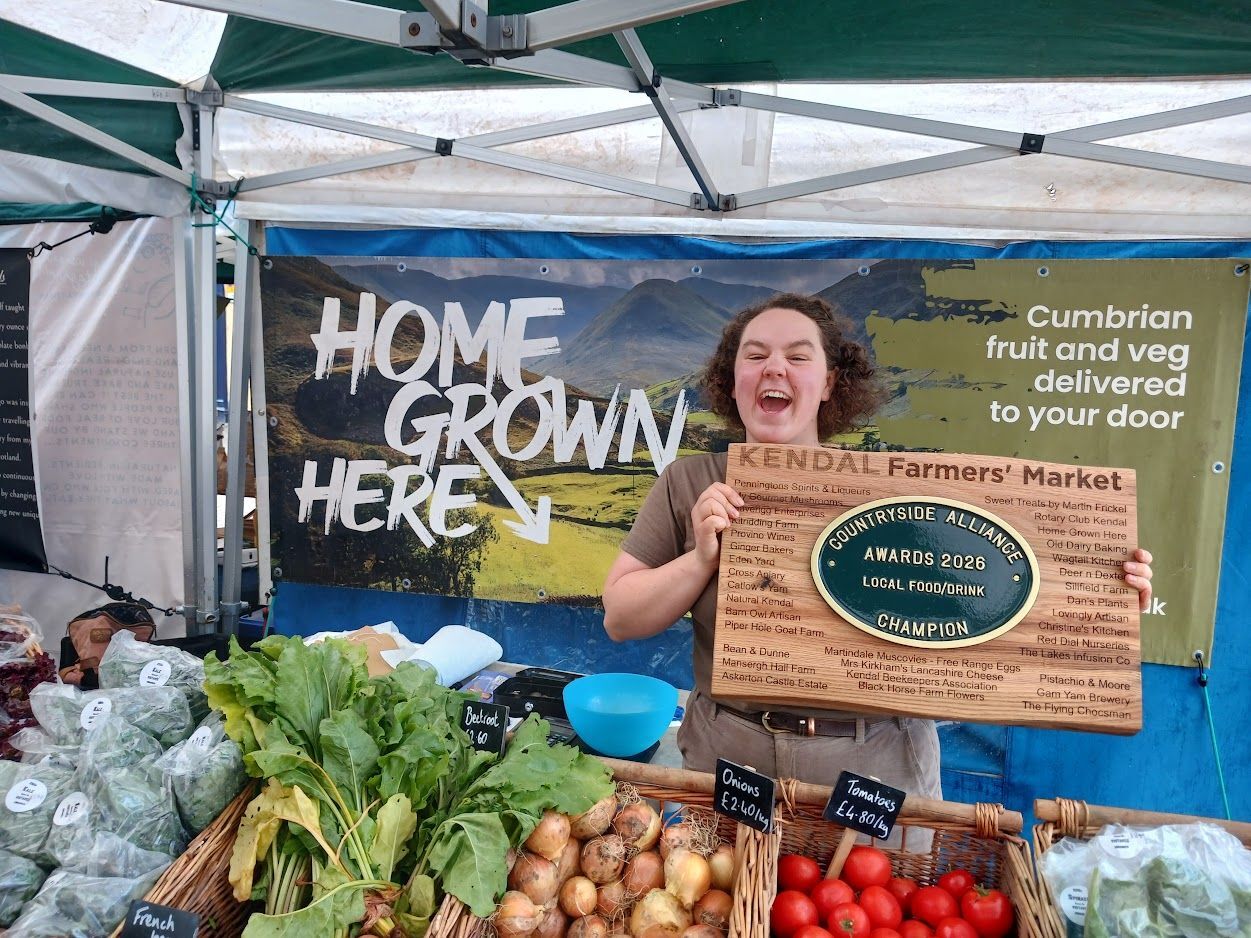
Kendal Farmers' Market celebrates award |
We’re very excited to be a small part of Kendal Farmers’ Market’s Countryside Alliance Award for best Local Food/Drink Champion in 2026! Kendal Market showcases a host of different producers from all around Cumbria, from crusty loaves of sourdough bread, to creamy goat’s cheese, to hand-reared venison, and of course delicious seasonal veg. We love being part of the community of stallholders and producers, and it’s a very special thing to be recognised by the Countryside Alliance for said community’s love of local food and produce.
Kendal Farmers’ Market is held on the second and last Fridays of the month from 9am-3pm. We’ll next be attending on September 25th, and then the last Fridays in October and November, as well as the Christmas market in December. |
|
|
Have you been away these summer holidays? Or perhaps you’re planning on a trip later in the year? Have you cancelled your veg bag delivery for the days you’re away yet?
Did you know?—our website allows you to cancel or donate a veg bag up to nine weeks in advance. We know life gets in the way, and it’s easy to forget, but the earlier you cancel your veg bag, the better it is for us, as we’re not planning on picking a crop for a veg bag that isn’t actually needed. There’s no need to wait until we open the veg bag on Monday to cancel—if you don’t need a veg bag for the following week, or the one after, you can cancel or donate it at any time in the nine weeks before 9am on the Tuesday of the week you don’t need it.
However, please bear in mind that we crop plan, plant and grow our veg for a set number of customers—which is determined by the number of people we have signed up for veg bags. So if you’re signed up, but cancelling every week, we’re growing veg for you that you’re not getting ☹. Last minute Monday cancellations make this a bigger issue as we’re harvesting based on a pre-determined number of veg bags, which can sometimes drop between 20 and 30 just between sending out the email on Monday and closing the bag on Tuesday.
Find yourself cancelling a lot because you’ve got the email, had a look in the fridge, and realised you’ve got too much veg? Here are some things you can do: If you’re weekly, try swapping to fortnightly deliveries – we don’t offer different sizes of veg bag, but receiving veg less frequently can help if you’re a smaller household Make use of swaps/surprise me – use the link sent out in the veg bag email to log in to your account and swap out of veg you may have in excess that week Consider sharing your deliveries with a neighbour, friend or family member – perhaps you know someone who might enjoy sharing local, seasonal produce? Explore new recipes and put veg in priority position on your plate – we love the BBC Good Food website for interesting seasonal recipes that celebrate vegetables!
And remember—if you do need to cancel, you also have the option to donate your veg bag instead to Upper Eden Food Bank, so that the cost of your bag can go to providing fresh, local veg to someone in need. |
|
Electric van review after first quarter: we love it |
Our biggest piece of news from our spring newsletter was the purchase of a new electric delivery van, with help from a grant from the National Lottery Community Fund. Since acquiring the van in April, it's already done over 4,000 miles of veg deliveries, all zero emission and mostly powered by our solar panels. Of course, the electricity bill has gone up, but we're loving the huge reduction in our diesel bills!
As well as saving us money and more importantly reducing our carbon footprint, the EV (nicknamed Evie) has been a massive improvement on our previous delivery van's propensity for breaking down... the old van spent almost as much time in the garage last year as it did out on deliveries! This has likewise reduced costs of getting repairs and needing to hire replacement vans when it was out of action. And our drivers would certainly agree that the biggest improvement that the new van has brought this summer has been proper, functioning air conditioning.
In terms of range, we're finding that we can comfortably fit an entire delivery round into the van's battery range, with room to spare. Of course, this is a summer average, when the battery is warmer and the veg bags are lighter, but it's looking like heavy winter veg, cold mornings and usage of the heating won't be stopping us from getting to even the furthest flung corners of the Eden Valley.
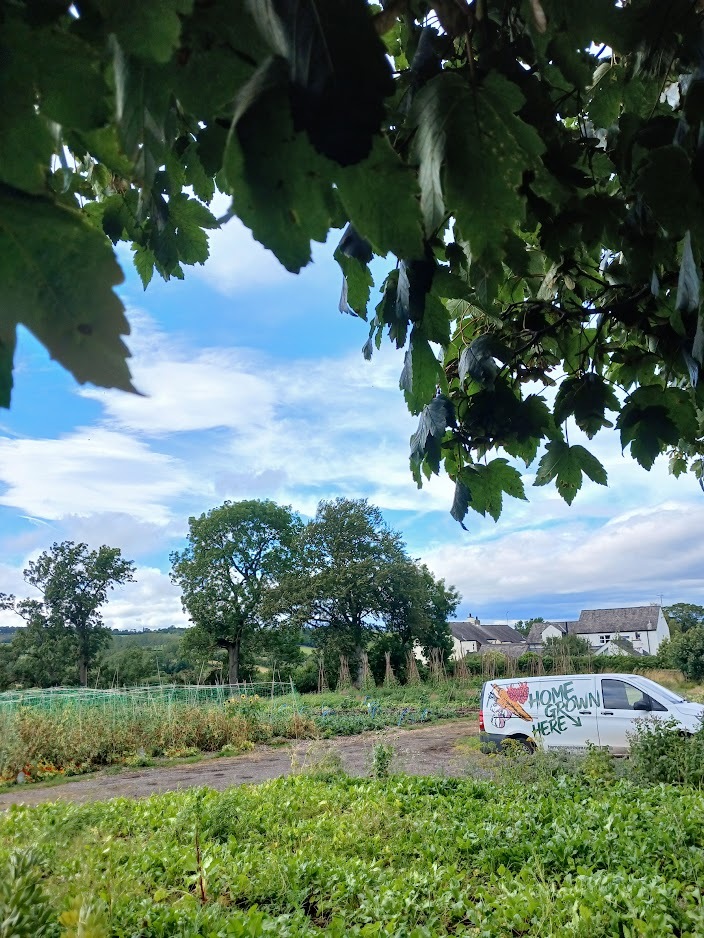
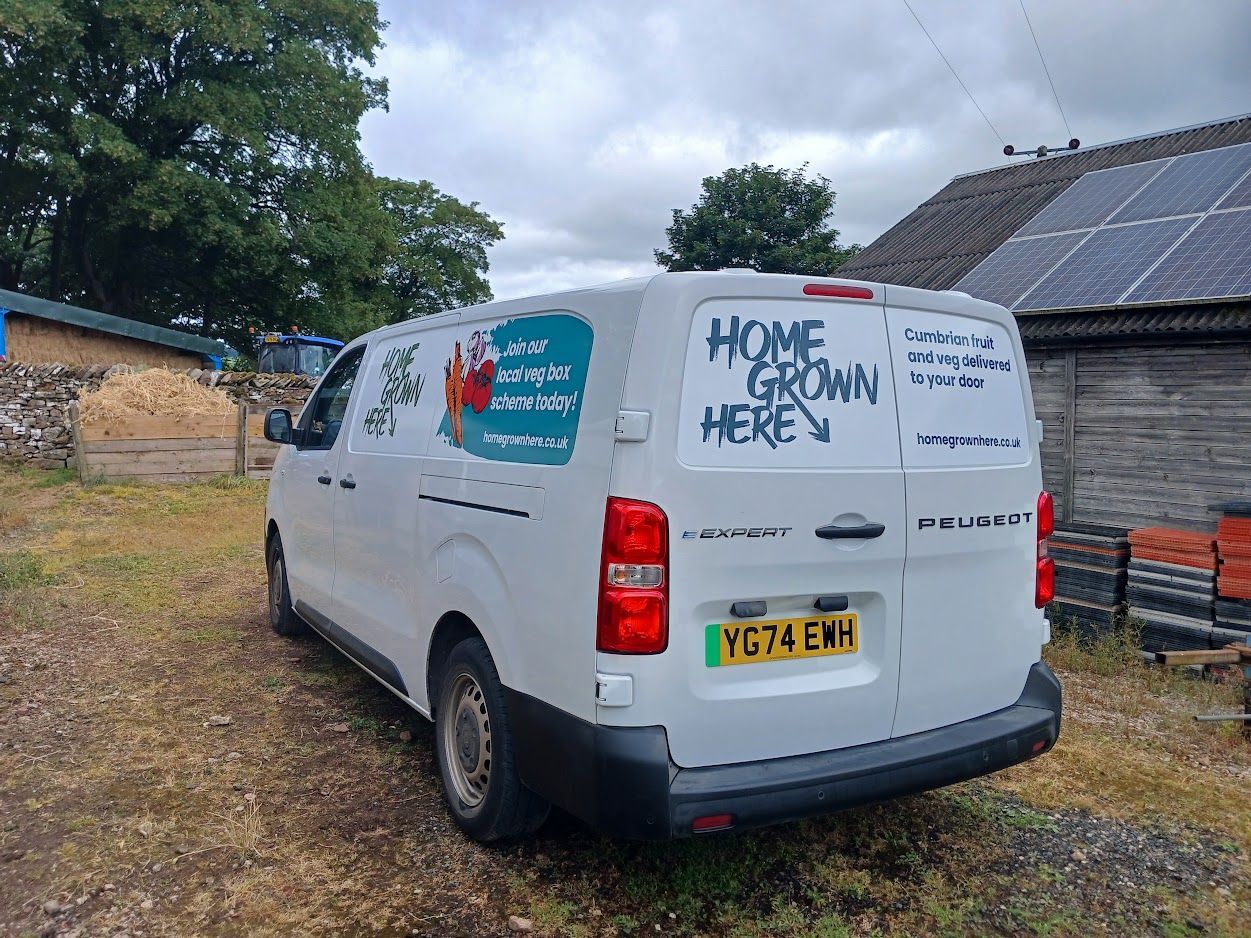
We've also now got proper branding on the new van, so you (or your neighbours) will no longer mistake us for your Amazon parcel delivery! It's not quite as snazzy as our other delivery van, but it gets the job done. Look out for us on the roads... |
|
|
|
If you’re new to the box scheme or haven’t received our newsletters before, you can catch up on our old news by heading to the News page of our website, where the previous newsletters from the past year are linked. There is also a feed from our Instagram account, which is a great place to get more frequent updates and photos of what we’re doing. |
|
|
|