|
|
My experience of time for the last two months has been peculiar: choppy, ironically flowing when I'm least mobile and stuttering when venturing beyond my normal haunts. I am by nature a bit of a homebody, so more travel than I'm used to has meant I've felt in a near constant state of either preparing to leave or settling in—to Asheville, Chicago, Jacksonville, home again. I'm en route to Myrtle Beach (happy birthday, Grandma!) from Sitka, Alaska, as I write, where I delivered a keynote to an inspiring group of community land trust practitioners from across the Pacific Northwest—fodder for a newsletter of the future, perhaps. It was nice to renew my thinking on housing for this political moment (a bit of which you can find on a recent episode of the podcast Booked on Planning), but it's also been mildly jarring to switch away from the little boxes that have dominated my attention of late.
Though I've been steadily chipping away at a proposal for this new book for a couple years, August presented the first opportunity to apply undivided attention to its realization. With that, came a question: how do I do this again?
My mountain of dusty notebooks proved their worth. I peeled away de-elasticized bands and unclipped still-tacky post-its to revisit how I went about writing a first book. A full accounting was not within—there's something ineffable about such creation—but I recovered tips and tricks from past Jonathan. There were the routines and restrictions I'd set for myself, questions to ask while editing, diagrams for how to incorporate feedback and review important sources, and a sweet little list of "Ways to Get Out of a Rut." Handy.
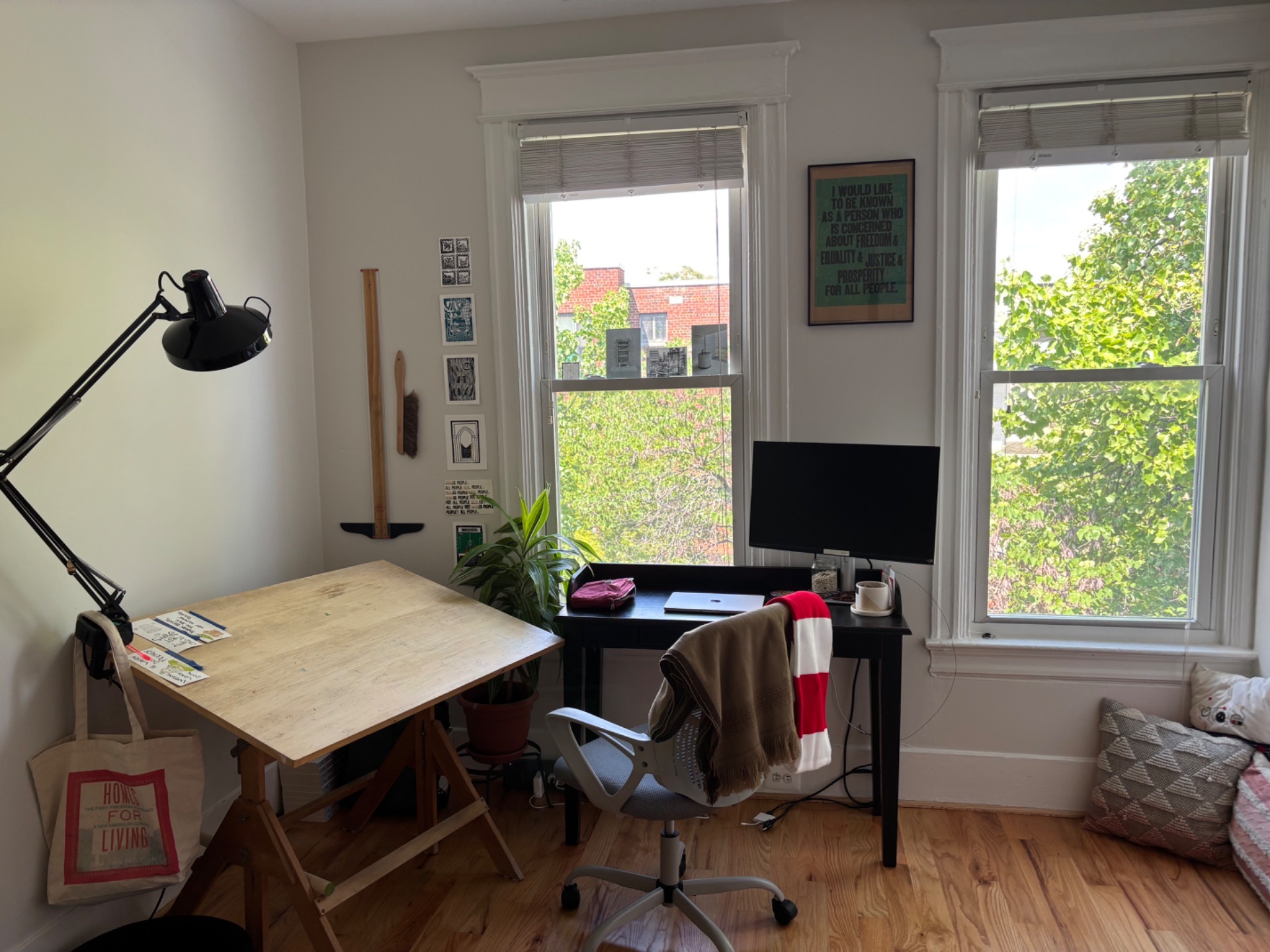
It's no coincidence that I started a concurrent effort to reshape the space I often write—that is, a guest bedroom I've occupied as an office for the better part of two years, bearing residue of head-scratchers and grievances, little wins and occasional moments of workaday bliss. In those first couple days, my new, full attention was split by Facebook Marketplace-scouring for another surface to accompany a desk I've had since high school. I'd shift from my vigil before desks, tables, and carts to tend to now obsolete processes, updating workflows for new software, new tools. Their purpose is, more often than not, to first capture information and ideas, then move them about to make them accessible or make connections, parsing their importance and ordering them for transformation into a text: notebook & Zotero & Calibre & Raindrop.io to Obsidian, audio file to transcript, Obsidian & brain to Scrivener, Scrivener to page.
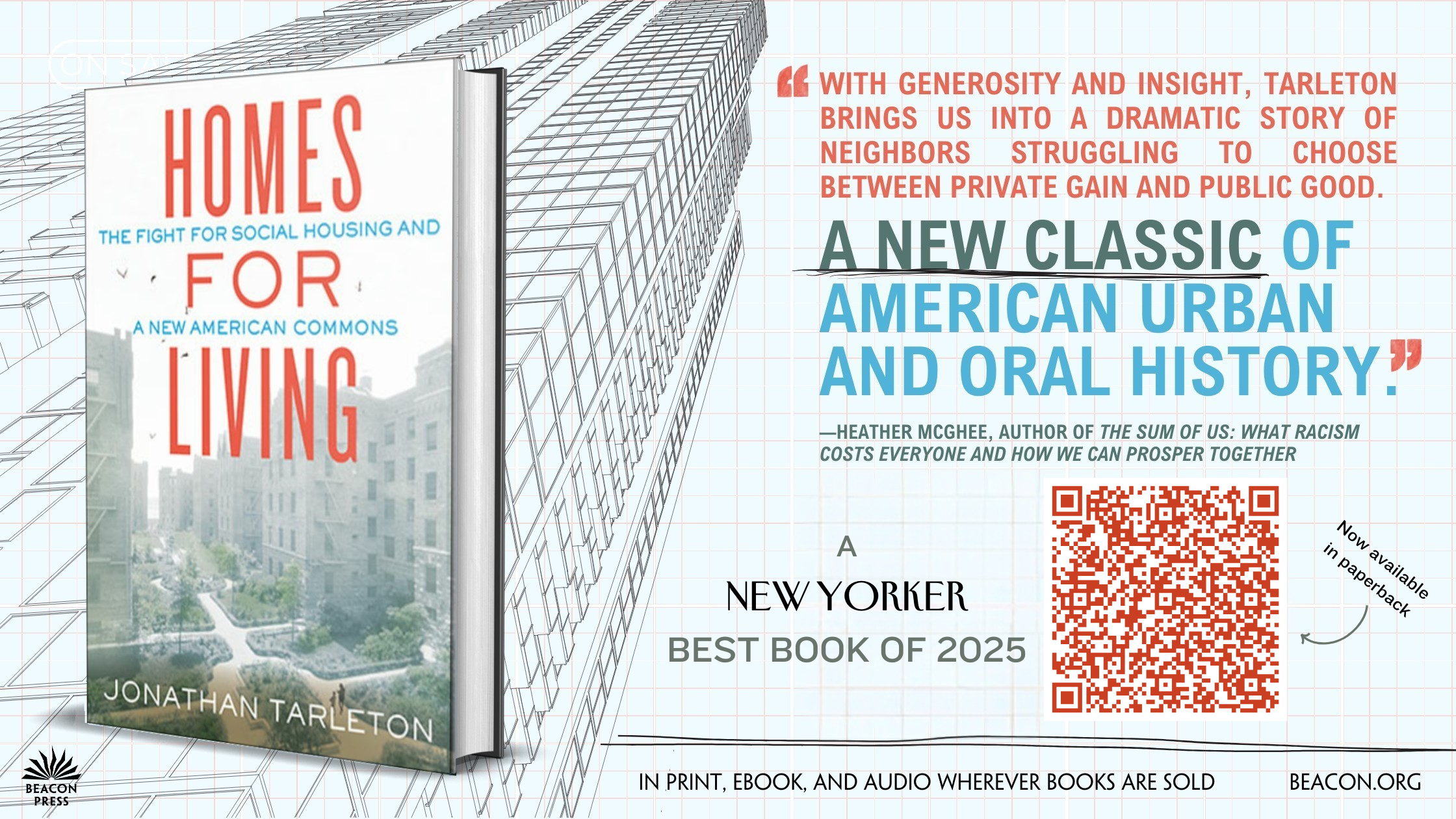
Maybe that list is a give away that my workflows often feel, even to me, overdone, inefficient, yet foundational—so much so that I felt the need to list my tools, some digital like those above, others the trusty physical ones that I was dusting off: a Zoom H4N Recorder whose date resets to January 1, 2008, whenever I take out the batteries, the pleasantly patinated leather notebook covers I've collected over the years, the Kaweco pen I'd gifted myself after Homes for Living's publication. I trust these, I am coming to find, to guide me back to the ineffable stuff or, more reasonably, to ground me enough so as to avoid the worst of new-ish project overwhelm. |
|
My vigilance soon paid off in a chosen surface, another foundation. A downsizing empty nester in Arlington was letting go of a drafting table that would ably serve a spread of papers, for book or for art. I was smitten, and soon enough I'd slotted it, water- and watercolor-stained, into our hatchback. It paired so well with a drafting lamp that I'd bought off Craigslist the first few weeks of graduate school a decade ago that it felt destined, and I rearranged the room around it. That I would hang, nearby, my T-square and bench brush—relics of a summer architecture studio even longer gone—felt only natural.
Their new home wasn't purely aesthetic. The old-school drafting implements are of a different class of tool that I've found grounding in other ways over time: objects that I've wrested from their original setting or which have endured past their original purpose to resurface at the ready when needed. I hadn't ended up in architecture school (where such things would hardly be needed now anyway), but I'd recently slid the square along a giant bit of matboard, marking out rectangle after rectangle to surround whimsical spot drawings from the New Yorker. A fancy A3 sketchbook I'd purchased for an urban design class, eventually dropped, gained new life when I started designing linocuts three years later. The bundle of erasers I'd rescued from the sidewalk following the last scene of an Odyssey Works performance in 2014 had kept me stocked for years, as had a box of X-ACTO blades I'd purchased when I thought I'd be slicing on the regular. Just weeks ago, I dug out a scrapbooking pouch gifted to me by my sister-in-law six years ago and unearthed a medieval-looking dental tool. It proved uniquely able in removing flaky adhesive from a sports jersey I aim to repurpose.
This is the allure of tools, particularly physical ones. They're there waiting for us to apply them to a task, and they're agnostic as to whether that's now or in a decade, whether it's what you had in mind for them initially or just what they're called into service for in a moment. That said, my good friend Scott once made a New Year's resolution that runs somewhat contrary to this: he resolved "to use the correct tool for the job." I think Scott stopped using our apartment keys to open boxes that winter, and in doing so gave me great cover to acquire tools for new hobbies to this day: a gnocchi board, bannetons, pie beads, a bone folder. Not entirely necessary, maybe, but, damn, are they satisfying. I also think of tools that I've left behind over the years and with which I look forward to being reunited. There's a router and table sitting in Georgia that I'd goaded my parents into buying when I was in my woodworking heyday, building poker tables with my friend Ben to sell to our classmates taken by the Texas Hold 'em fever of the mid-naughts. They'll be there when I need them and when I have space, I tell myself.
But maybe the most edifying tools are the ones you build for yourself. I remember Ben and I calculating angles to fashion a jig to make our table-cutting process faster, cleaner. I find a special satisfaction making a print guide for my linocut blocks, so the ink meets the paper just so. These Jonathan-made ones don't always work as intended, I'll admit. As I started my reporting trips in August, I sought to make use of a long drive from DC to Asheville by listening to a book I'd gotten for research. I "bookmarked" key passages with a click as I drove, then fashioned a rather janky method of playing those passages back through transcription software to "take notes." My god, what I thought would be more efficient became a royal time-suck. But it was my own little jig of sorts, crafted for the peculiar shape of my brain—one now rattled by the proverbial head-banging that followed, but still mine. My tools, always right for enabling and steadying myself. |
|
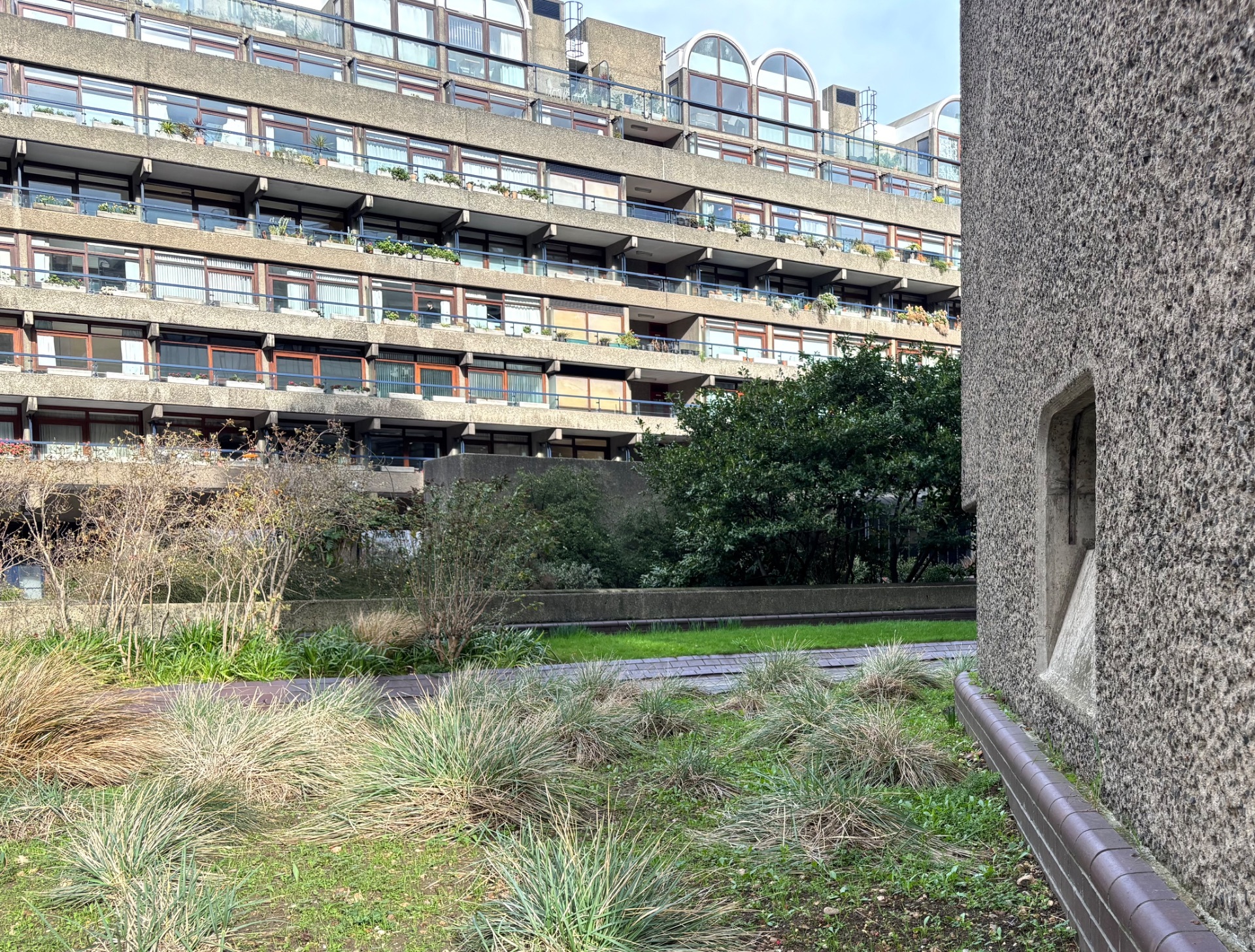
So many good textures and characters in London's Barbican Estate |
One of my favorite parts of writing, or perhaps just life, is seeking an answer to a small question, then ending up on some odd research foray. (Etymology often plays a part.) A taste of the spiral: |
|
The Question
What are some of the groups aligned against the use of ballot drop boxes in elections? |
|
|
The Tangent
The Association for Mature American Citizens (AMAC) is the right-wing alternative to the not-particularly-progressive, now acronym-only AARP (formerly American Association of Retired Persons). They'll help you navigate Medicare and Social Security while "stopping Medicare for All" and "opposing socialism!" Very mature. |
|
|
|
|
|