We are back after a summer break, with a busy end of the year ahead and some new plans for the newsletter, which we will be revealing soon.
It's now less than three months until the Platform Work Directive is supposed to be transposed in all 27 EU member-states, with the vast majority of governments still not having published a draft proposal for the legislation. We can expect many proposals to be coming forward this month, while some countries are also likely to miss the 2 December deadline.
The Finnish Government published a "minimum implementation" proposal for PWD transposition in July, which has received a critical response from unions and policy analysts. The Italian Government also released its plans for PWD transposition in July, although the full proposal has yet to be published. Unions expressed unhappiness with the lack of consultation before the proposal was released, and concerns that the presumption of employment may set up barriers to many platform workers from challenging employment mis-classification. If you are aware of significant developments with PWD transposition where you are, email us at GEP@BraveNewEurope.com.
Meanwhile, you may have seen in August that the Dutch Data Protection Authority (DPA) landed Uber with the second largest fine ever for breach of the General Data Protection Regulation (GDPR). The €825 million fine was because the company made fully automated decisions about drivers, including decisions to temporarily or permanently de-activate drivers from the app for bad customer reviews or suspicion of fraud. Article 22 of GDPR prohibits automated decisions which have a significant effect on data subjects. The case was first brought forward by drivers in France working with data experts at Swiss NGO PersonalData.io. Uber is appealing against the fine.
Interestingly, the Dutch DPA, which has yet to publish the full findings which led to the fine, says that "Uber has now stopped the violations". However, there is good reason to believe that even if Uber has stopped automated de-activations for the reasons identified by the investigators, it is still in breach of Article 22 of GDPR because it continues to take other significant automated decisions which affect its drivers and riders.
Worker Info Exchange has lodged a class-action lawsuit at the Amsterdam District Court on behalf of drivers in the UK, Netherlands, Belgium, France, Germany, Poland and Romania on the basis that Uber's dynamic pay and work allocation systems qualify as automated decisions which significantly affect drivers. Their research has found that Dutch drivers have lost on average €7,500 per annum since 2022 due to dynamic pay, with UK drivers losing £5,300 per annum to date since 2021. The Dutch DPA's ruling may have opened a pandora's box of drivers and riders seeking compensation from Uber, and indeed potentially many other platforms, for automated decisions that have caused them significant harm, including in the form of lost earnings.
Perhaps the potential for compensation claims had something to do with Uber's decision to axe 3,300 staff around the world, about 10% of its headcount (excluding drivers and riders). The job cuts are ostensibly about streamlining operations and reducing bureaucracy, but that's what companies always say when they let go of employees. We suspect there are two main drivers of the job cuts: 1) the company plans to plough $10 billion into AV technology in coming years. Uber is not necessarily in a strong position in the emerging AV market because it relies on partnerships with AV makers, rather than owning the tech itself. 2) It was notable in Uber's last earnings call at the start of August that some investors brought up the fact that revenue growth was not matching the growth in trips and deliveries, meaning that their margins per order were narrowing, not growing. CEO Dara Khosrowshahi may be under investor pressure to find ways to boost profit margins for a company that is still massively in the red over its lifetime.
As you will see below, this is a special bumper edition of the newsletter, with many more big developments and important articles on the gig economy appearing in the past month, so fill your boots!
Ben Wray, Gig Economy Project co-ordinator |
|
Gig Economy news round-up |
JUST EAT TO EXIT BULGARIA: Just Eat Takeaway will leave another market, with the company announcing that it is set to pull out of Bulgaria on 15 September. Just Eat left the Danish market in April. The decision to exit Bulgaria was taken "to focus investment on accelerating growth and building strong, sustainably profitable market positions," the company said. Just Eat has been competing with Bolt Food, Glovo and Wolt in the southern European country. The company said it would be "complying with the statutory processes" for the redundancy of 220 staff and 480 couriers in the country. Just Eat was bought by tech firm Prosus in 2025 with a new CEO taking over at the start of 2026. The company has subsequently restructured operations in a number of countries, moving more towards an independent contractor and sub-contractor models, as well as pulling out of some markets all together. Read more here. DELIVEROO SEEKS TO END JUDICIAL CONTROL IN ITALY BY RAISING PAY: Deliveroo Italy has announced that it will raise the pay of its riders by 40%, in a bid to end the partial judicial control the company has been placed under since February. The Milan Public Prosecutor's Office placed the company under extraordinary measures after an investigation found that Deliveroo riders were regularly earning poverty wages of €3 to €4 per delivery. Deliveroo announced on 28 August that it will raise pay rates from €10 to €14 per hour as well as introducing new safety measures. It is unclear as yet whether the move will satisfy the Milan public prosecutors. In May, Glovo announced a similar pay hike in a bid to end the extraordinary measures which were also placed on it, but that was not deemed sufficient by a judge, which ruled in August that the court administration should not be lifted. The prosecutors argued that Glovo's riders were still being exploited and should be hired as employees. Read more here. GLOVO FACING SANCTION FOR CONTINUING CATALAN OPERATIONS DURING A HEATWAVE: The Catalan Labour Inspectorate will sanction Spanish food delivery platform Glovo for continuing to operate during a heatwave, breaching worker safety protocols. The offense was committed on 8 July, when a red weather warning for extreme heat was in place in Catalunya, a region in the north-east of the Spanish state which has Barcelona as it's capital. The CGT union had denounced the company for continuing operations despite the weather warning between 12-6pm, when temperatures reached up to 40 degrees. The Spanish Government introduced new rules in 2023 requiring companies which operate with workers outdoors to suspend their activities during red weather alerts. The CGT cited Glovo's own protocol, which states that the riders should receive a message in the app telling them when to disconnect from the app during periods of red weather warnings, but the protocol was not activated on 8 July, neither for riders employed by directly by Glovo or for those who work for sub-contractors. Read more here. WOLT COURIERS TARGET MCDONALD'S RESTAURANT IN COPENHAGEN STRIKE: Deliveries have blocked a McDonald's restaurant in the Danish capital of Copenhagen over a series of Friday evenings, with couriers targeting the fast food chain in a bid to put pressure on Wolt. Couriers have been unhappy about collapsing pay rates at the Finnish headquartered food delivery platform, with major strikes previously taking place in May. "We’ve tried to target a specific location where we estimate there are a lot of orders on a Friday afternoon. And then we reject the orders," Rasmus Hjorth, a former Wolt courier who is an activist in the 3F union's couriers branch, told 'Fagbladet'. "By having a large number of people refuse orders, we effectively shut down operations for that specific restaurant. So, I think we’ve found a way to paralyse the system." Hjorth explained that McDonald's had been specifically targeted because the company is "heavily dependent" on deliveries and is a member of the employers' association with a collective agreement for its restaurant staff. "They ought to take responsibility for the working conditions of the suppliers they use," he added. Wolt courier Adam Lipcsei said he was striking because "Wolt keeps cutting the pay", adding that the goal of the strike was ultimately to get a collective agreement. Read more here. MEP SAYS EU SHOULDN'T PERMIT UBER'S BID TO BUY DELIVERY HERO: It would be "unacceptable" if the EU fast-tracked Uber's attempted takeover of Delivery Hero, Andreas Schwab MEP has said. Uber agreed a deal to takeover Delivery Hero in July for €12.9 billion, a move that would make Uber Eats one of the largest food delivery platforms in the world. Schwab, the rapporteur of the EU's Digital Markets Act (DMA) and a strong critic of monopolies, said that Uber's takeover would create a "strong concentration" in the food delivery sector where "data is crucial", and therefore ran contra to the "logic" of the DMA. The MEP, who is a member of the centre-right European People's Party, added that the involvement of US private equity firm SSW Partners in the deal did not fully offset concerns about monopolisation, calling on Brussels' officials to "learn from the past" by avoiding the emergence of "gatekeepers". SSW Partners will buy Glovo and 13 other Delivery Hero brands in markets where Uber Eats already operates, but 'El Mundo' reports that the spin-off operation will require approval from Spanish competition authorities before it can be approved. Read more here. AMAZON TO SHUT DOWN AMAZON MECHANICAL TURK: Amazon is closing Amazon Mechanical Turk (AMT), bringing to an end the first major 'microwork' platform. AMT, which launched in 2005, will close permanently on 30 September, the company announced. Workers on AMT complete short digital tasks behind their computer or smartphone, which are used to fix or test automated systems. AMT has been notorious for exploitative working conditions, with workers earning very little per-task and often going unpaid for work. At one point more than 500,000 micro-workers worked on AMT, but the platform has come under pressure in recent years from competitors like Surge AI and Scale AI, which have better geared their microwork platforms for the generative AI age. The number of micro workers has surged around the world in recent years as foundational AI models rely on human labour to test and fix their systems. Read more here. SPANISH UNION ACCUSES SUB-CONTRACTORS OF "CORRUPTION" IN RIDER ELECTIONS: The CCOO union in Spain has accused sub-contractors of "corruption" in its handling of elections to workers' committees. In Spain, employees can establish workers' committees which given them official rights within the company they work for. Since riders moved to an employment model in the last few years in the southern European country, there has been a surge in the number of workers' committees being established, including at sub-contractors since the three large platforms - Glovo, Uber Eats and Just Eat - all operate at least some of their operations via intermediary firms. CCOO accused the sub-contractors Closer Logistics (which works with Uber Eats) and Fliits (which works with all the platforms) of working with a yellow union called SLT to offer riders affiliated to CCOO bribes not to stand in workers' committees elections. The union adds that CCOO-affiliated riders have been threatened with dismissal and been offered special benefits, such as improvements to their schedules, to withdraw from the elections. SLT denied the claim while the two sub-contractor firms did not respond to the questions of El Paìs. Read more here. RIDERS IN EDINBURGH ISSUE STATEMENT AFTER LATEST RACIST ATTACK: Food delivery couriers in the Scottish capital of Edinburgh have issued a new statement after the latest racist attack, which saw a rider's motorcycle torched by bigots. The incident comes just weeks after a rider was hospitalised following a knife attack in the city. The statement, issued through the Worker's Observatory, a worker-led research group linked to Edinburgh and St Andrew's universities, stated "These are not isolated episodes. They are part of a stream of racist attacks that delivery riders have faced for years. The number of stories that reach the public is tiny compared to all the incidents that happen, day in, day out. However, precarious, vulnerable workers are often too insecure to speak out about their situations, which brings the risk of repercussions. Workers’ stories are rarely documented." The statement went on to add that they had joined a forum organised by Edinburgh City Council to discuss the ongoing safety issues that riders face and acknowledged the efforts of the Council, but added that "more needs to be done, and that any attempt to face the situation needs to consider how to strengthen the organising capacity of the vulnerable people affected by the attacks." Racist attacks on riders have increased in recent times in the UK, including in pogroms earlier this year in Belfast and Glasgow. Read more here.
Have we missed something important? You can help keep us informed about what's going in the gig economy in Europe by e-mailing GEP@BraveNewEurope.com. |
Digital Platform Observatory |
|
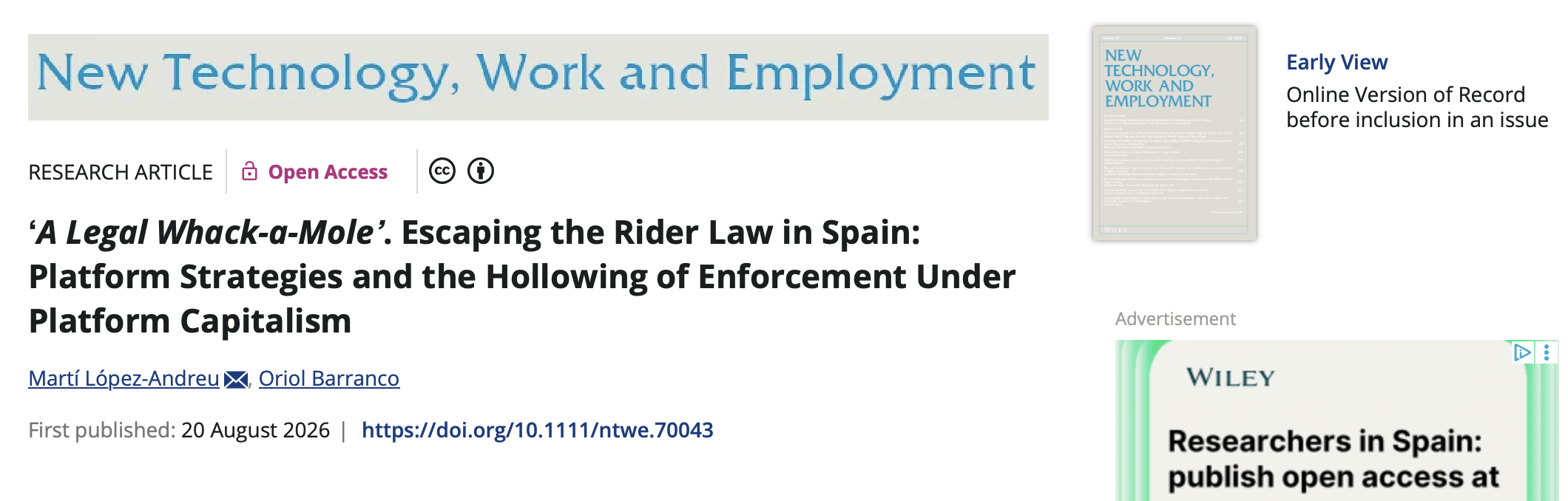
Scholars Martí López-Andreu and Oriol Barranco examine the implementation of the Rider Law in Spain in this paper. |
|
|
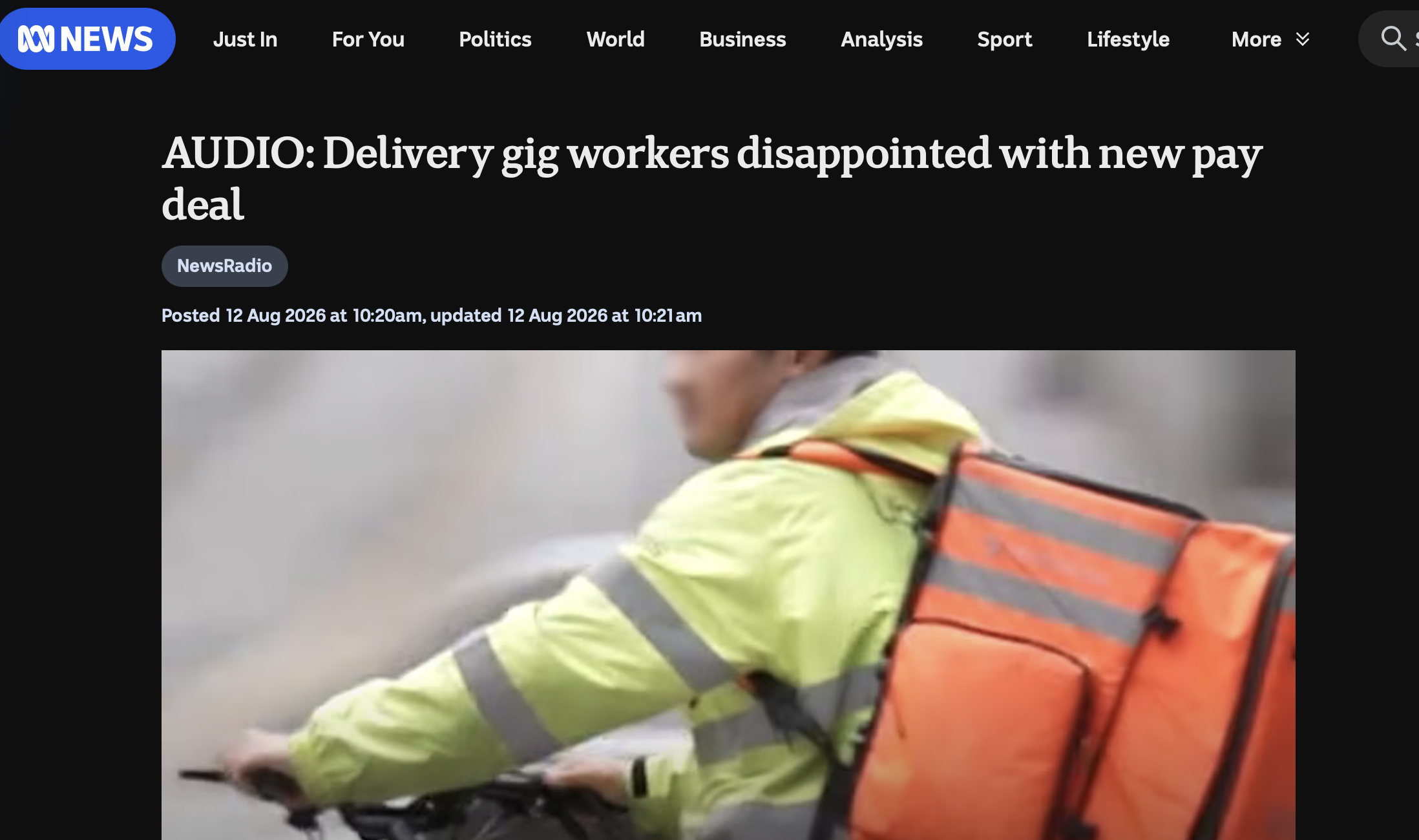
A critical take from a rider in Australia on the new pay agreement covering the food delivery sector down under. |
|
|
|
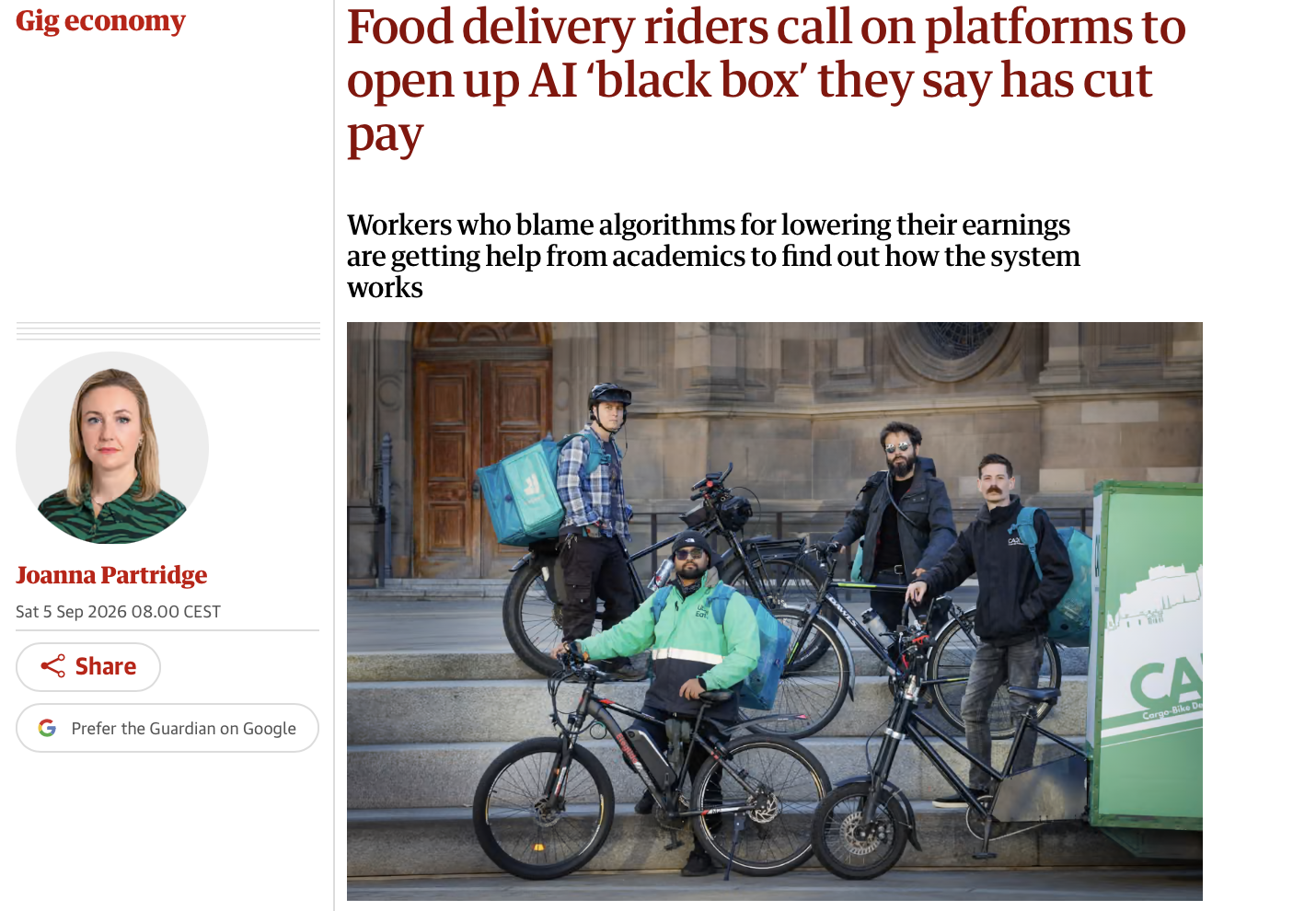
Interesting feature in The Guardian on Workers' Observatory's work organising around riders' data issues in Edinburgh. |
|
|
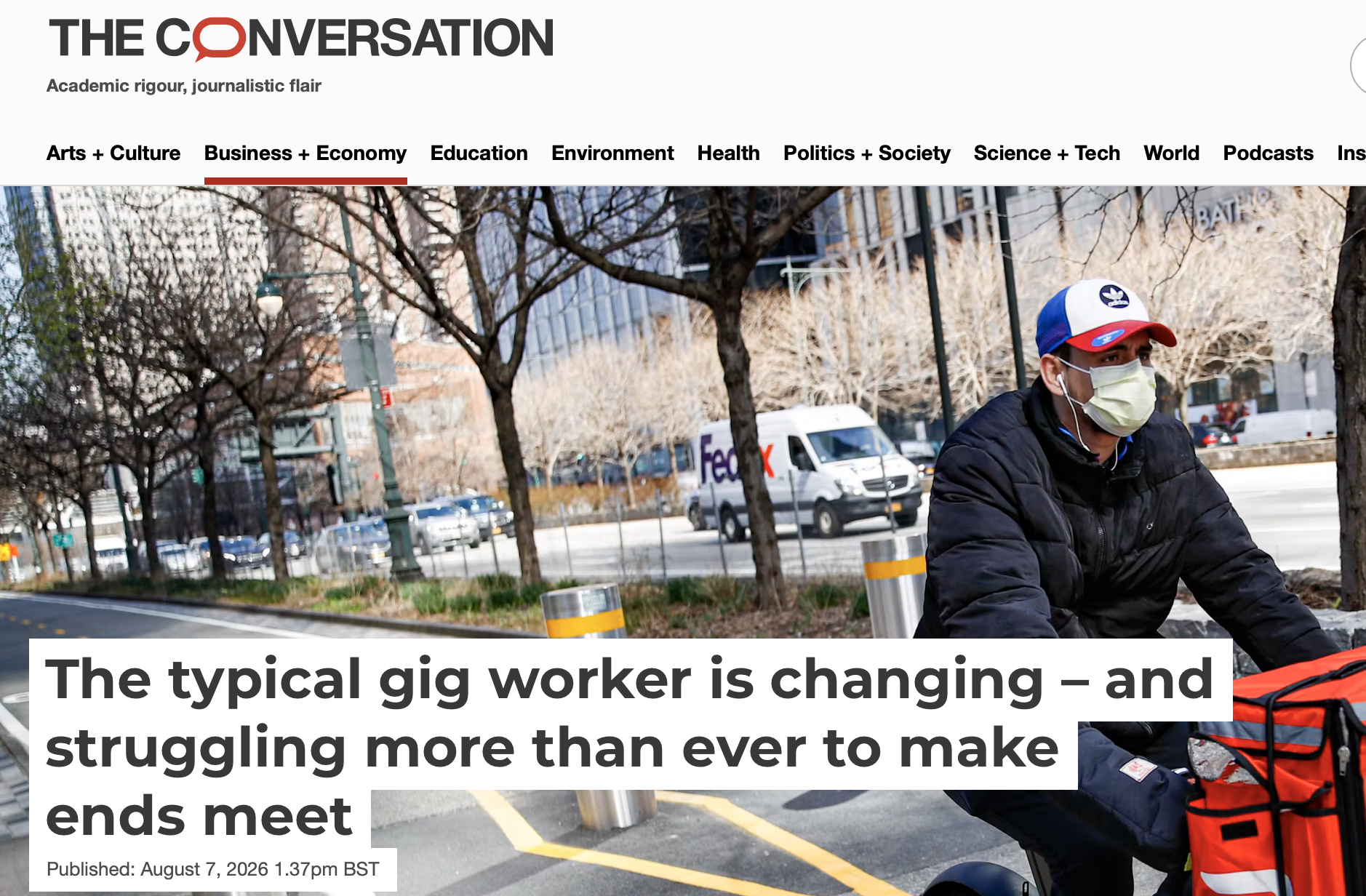
Very interesting new data on how gig work has become the work in the US that is most in need of government subsidies to top-up poverty pay.
|
|
|
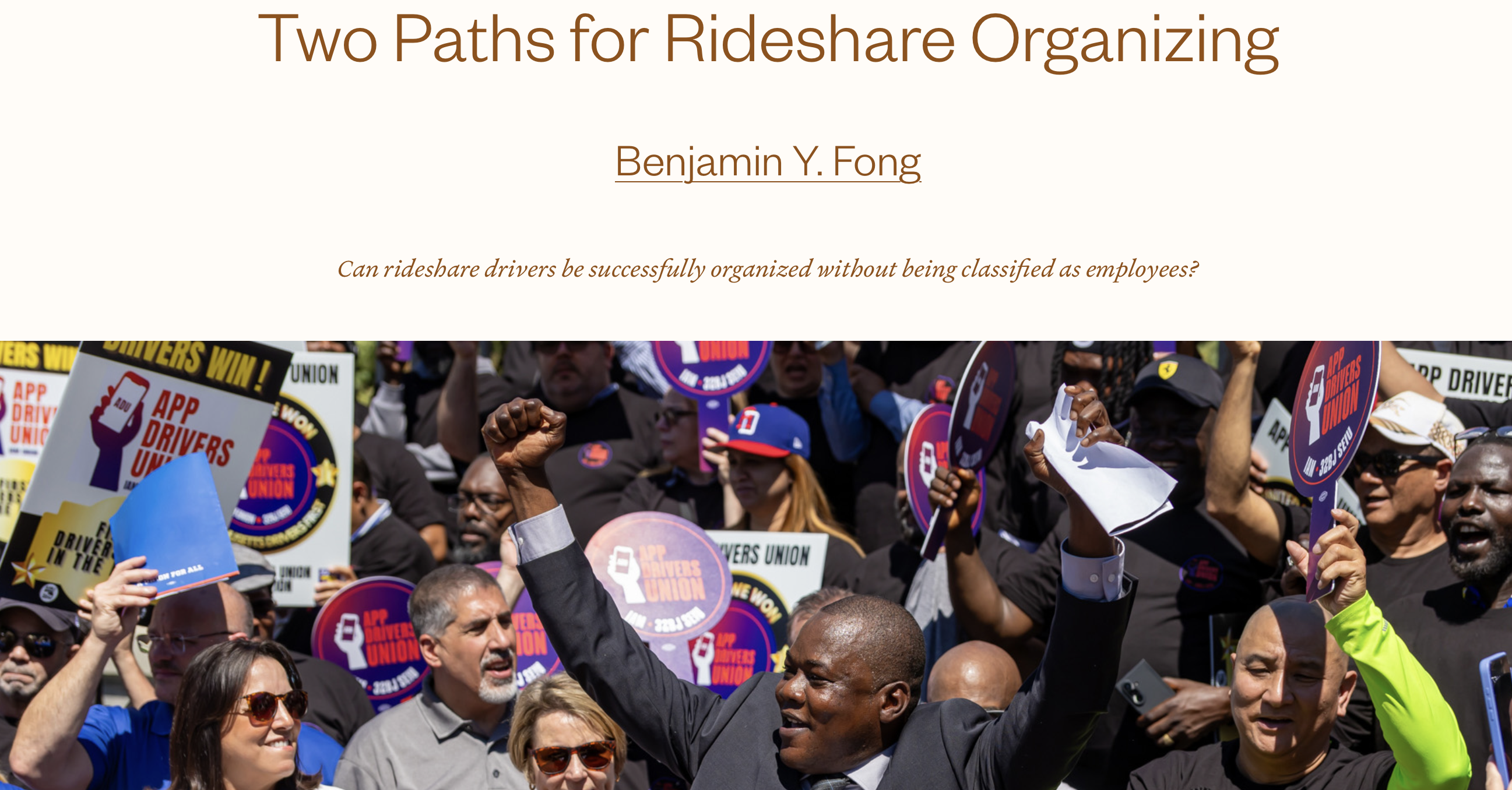
Piece in 'Phenomenal World' explores in-depth the challenges posed by employment classification questions when it comes to organising ridehail drivers. |
|
|
|
Contact project co-ordinator Ben Wray at GEP@BraveNewEurope.com with news, events, ideas, feedback...whatever you think might be useful.
And if you like the Gig Economy Project newsletter, why not get your friends and colleagues to subscribe? Here's the link. |
|
|